The table is booked. You still want the dinner, the conversation and the excuse to put something other than work clothes on.
You’re less sure about the second bottle of wine.
Perhaps you have plans tomorrow. Perhaps you’ve started noticing how much of the weekend disappears into recovering from Friday. Or perhaps you simply don’t enjoy drinking as much as you used to.
None of that means you want to stop going out.
It does leave you with a different question when the drinks menu arrives: what would you actually like instead?
The shift is bigger than Dry January
In YouGov data published in June 2026, 33% of British adults who drink said they were drinking less than a year earlier. Just 8% said they were drinking more.[1]
The longer view also shows change. Drinkaware’s 2025 Monitor found that 14% of UK adults drank four or more times a week, down from 18% in 2018. There was little change from 2024, though: this is a longer-term shift, not a fresh collapse in drinking every year.[2]
You don’t have to call yourself sober to be part of it. You might still enjoy wine with a meal, while deciding that a routine Tuesday drink has stopped earning its place. You might want one cocktail, then something else you’re equally happy to order.
That creates a different brief for the drinks menu. The alcohol-free option has to work for people who still drink, as well as people who don’t.
Health matters beyond one generation
It is easy to tell this story entirely through young adults. But the reasons for reconsidering alcohol extend across life stages.
In Drinkaware’s survey, 64% of UK drinkers using moderation techniques cited at least one health-related reason.[2]
Among those moderating, the age breakdown included:
| Reason for moderating | Ages 18–34 | Ages 35–54 | Ages 55+ |
|---|---|---|---|
| Reduce long-term health risks | 31% | 33% | 36% |
| Better sleep | 29% | 31% | 23% |
Source: Drinkaware Monitor 2025. These are self-reported motivations among drinkers who moderate, not percentages of everyone in each age group. They show health concerns across generations; they don’t prove every generation has become more health-conscious over time.[2]
The personal version of those numbers might be much simpler. You want to enjoy dinner and still feel up to a walk tomorrow. You’ve finally found a training routine you like. You would rather spend Sunday doing something than waiting to feel yourself again.
Those priorities can matter at 25, 45 or 65. You don’t need to be chasing a perfectly optimised life to decide that how you feel afterwards belongs in the decision.
Sometimes you just don’t fancy it
Health isn’t the whole explanation. In the YouGov findings, 51% of people drinking less cited reduced desire to drink; 33% cited affordability.[1]
That deserves some space too. Choosing less alcohol doesn’t have to begin with a dramatic turning point or a new identity. You can look at the menu, realise you don’t particularly want wine, and order something else.
You shouldn’t then have to choose between a drink you don’t want and a substitute you’re only tolerating.
Alcohol-free can start with what you want
An alcohol-free beer can be exactly right when you want the taste of beer. A good 0% spirit can keep a familiar order easy. There is a place for both.
But a drink without alcohol has a much wider set of possibilities.
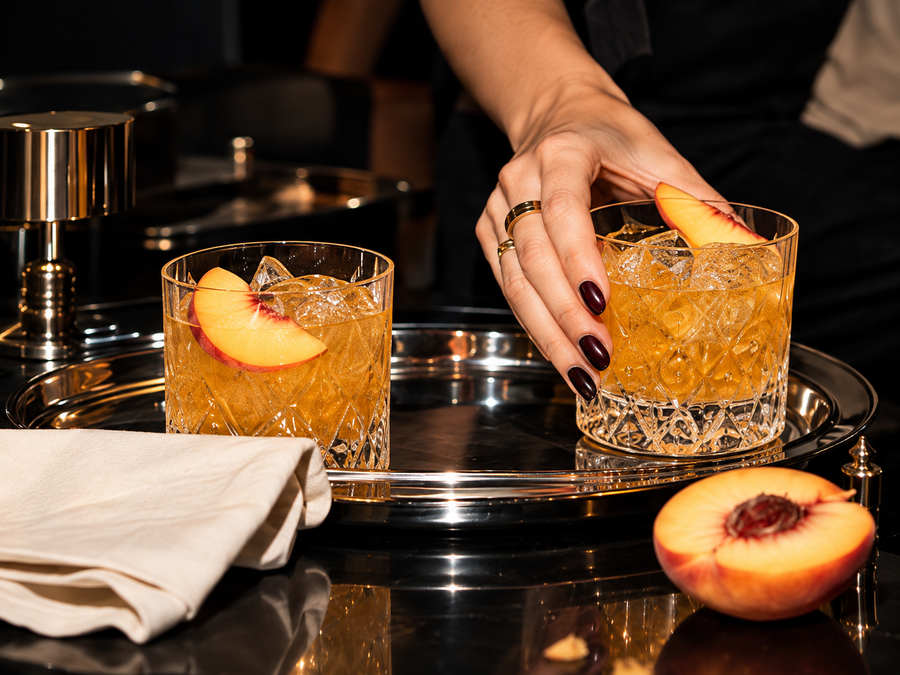
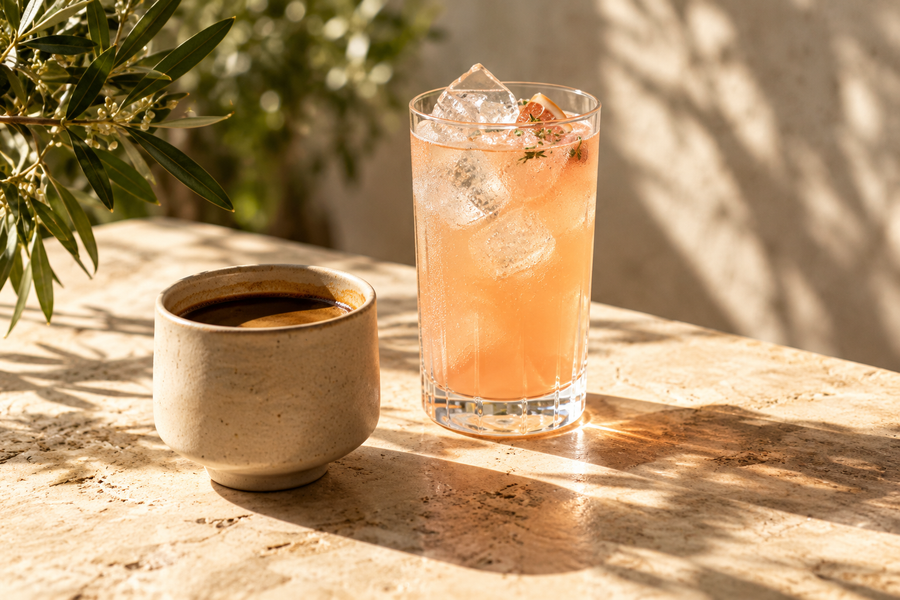
It could be sharp and botanical. Fresh peach and lime over ice. Something sparkling that works with the food. Or a functional drink with a formula chosen for a particular purpose.
The starting point can be flavour, the occasion or what you want from the drink. It doesn’t always have to be an alcoholic product with something removed.
You can want less alcohol and more from the drink you choose instead.
That doesn’t mean every glass needs added ingredients. Sometimes a carefully made soft drink is all you want. It means there is room to ask for something beyond a convincing imitation.
Where Elevate comes in
That question helped shape Elevate.
After giving up alcohol, I wanted something beyond drinks that simply imitated it. That became part of a wider idea for ROMU: thoughtful supplements made for the moments when you want more from yourself.
Elevate is a Tropical nootropic powder built around energy, focus and composure, with 14 active ingredients. Each stick contains 70 mg of natural caffeine alongside 200 mg of L-Theanine, within a formula whose active doses are disclosed.
It has a place beyond the drinks menu: an earlier social plan, a demanding afternoon or the gap before something you want to show up for. You don’t need to be giving up alcohol to be interested in it.
The distinction is in the formulation. Elevate has its own ingredients, flavour and intended use; it isn’t trying to recreate the taste or effects of a spirit. You can explore the formula and decide whether it fits what you want from that moment.
Timing matters too. It contains caffeine, so for a late dinner or an evening close to bedtime, a caffeine-free drink may be the better choice.
Keep the part you were looking forward to
You can still book the restaurant. Invite everyone over. Stay for the story that takes far too long to tell.
The choice in your glass doesn’t have to carry the whole evening. It just needs to be something you’re pleased to have there.
And when the waiter comes back, “I’ll have another one of those” should be something you mean.
Sources
- YouGov (22 June 2026). Why are one in three Brits drinking less alcohol in 2026? Profiles data collected June 2025–June 2026, weighted to represent adults aged 18+ in Great Britain. Figures concern reported changes, not measured alcohol sales.
- Pearson, A., & Slater, E. (2025). Relationships with alcohol. Drinkaware Monitor 2025. YouGov survey of 7,256 UK adults aged 18–85, June 2025. Health motivations: printed pages 38–40. Moderation includes managing drinking, not necessarily reducing consumption over time.
Read the full Drinkaware report. These surveys examine drinking behaviour and motivations; they do not test Elevate.